Effective urban local government in Bangladesh
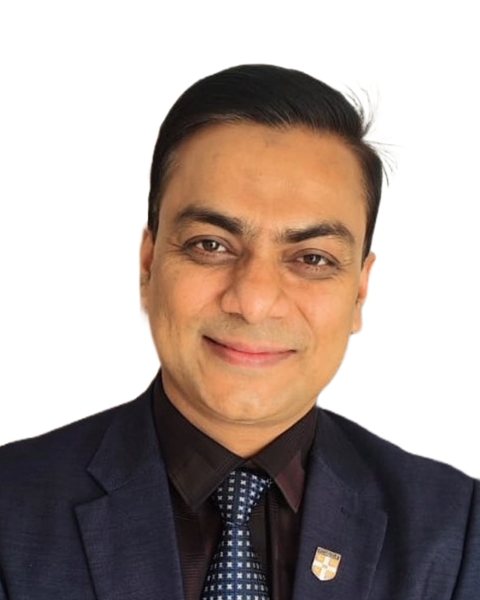
To ensure that urban local government is as efficient and effective as possible, Professor Dr Mohammad Tarikul Islam, who has extensive experience of local government and serves on the national Local Government Reform Commission, explains why he believes that quick action is needed.
In the present time, it has become clear that the government, or local government institutions, play the main role in urban management, but they are not the only institutions. Many aspects of the city, especially the provision of citizen services, depend on the presence and activity of many private - for-profit and non-profit - institutions. For example, the health system in urban areas of Bangladesh. According to the current law, the main responsibility for providing primary health care to citizens in cities lies with the municipality/city corporation, but in reality, it is seen that in addition to government hospitals, many private for-profit clinics, hospitals are working in providing all types of health care, including primary health care, and at the same time, many private non-profit institutions (such as Destitute Health Centers, BRAC) provide health care to citizens.
Partnership and inclusion
The provision of any citizen service no longer depends solely on local government institutions. In such a reality, the effective inclusion of private institutions in urban management is now the need of the hour. On the other hand, the political situation, economic situation, etc. of the city act as one of the main regulators in urban management. Taking into account these complex political-economic-administrative dimensions and the development aspirations and cultural characteristics of Bangladesh, the main step in establishing a future-oriented urban management system is to transform the city corporations of Bangladesh into a city government system suitable for the 21st century by making the necessary legal, structural and behavioral reforms.
It is time-consuming to transform the existing municipal and city corporation structures into a city government system. For this transformation, not only changes in the municipal or city corporation structure will be required, but also legal and structural reforms in other civil service institutions are required. And at the same time, it is important to remember that this transformation has a political-economic dimension that can stand as an obstacle in the transformation process. Considering the experiences of other countries and Bangladesh’s own political and social realities, the Local Government Reform Commission of Bangladesh formed in 2024 has put forward several recommendations as immediate steps for the big cities of Bangladesh.
Presidential to parliamentary
Major changes will have to be made in the current structure to democratise the municipalities and city corporations. For this structural change, the city corporation will have to be converted from a 'presidential model' to a 'parliamentary model'. The laws of the municipalities and city corporations will have to be changed and the wards will have to be transformed into the main outlets for providing citizen services. Essential citizen services such as birth, death registration, trade license, waste management, etc. will have to be provided from each ward. Since the population in each ward has already increased a lot and this number is increasing, at least two and not more than four associate councilors will have to be appointed in each ward. The terms of appointment and scope of work of these associate councilors will be determined by the corporation. The elected councilor can delegate all kinds of responsibilities to this associate councilor except those related to finance or bank account management.
There is a lot of difference in size between the wards of the corporation and the municipality. Since internal migration is almost constant in cities, the population of the ward is not limited to the prescribed number. The size of this ward will have to be rationalised by the Election Commission on the basis of population and geographical proximity to the size of the boundary. The rationalization of the ward can be done under the supervision of the Election Commission. It is important to increase the opportunities for citizen participation in the local decision-making process by establishing effective communication with the local government institutions, grassroots organisations and backward communities.
Accountability and protection
Steps need to be taken to establish local government institutions as institutions that protect the rights of the people and provide services. In this regard, it is very important to establish connections with local government institutions and the people at the grassroots level to establish good governance at the local level and ensure accountability and public participation in local development activities. For this, the access of representatives of grassroots social, religious, cultural, community-based and NGO organizations to various committees at the ward level of the City Corporation should be ensured, and at the same time, their representation in various committees of local government institutions should be ensured, including exchange of views, exchange of information, and receiving advice.
One-third of the positions of chairpersons of the standing committees of the City Corporation should be reserved for women members. Regular awareness and capacity building programs should be organized for the elected women representatives of the local government on the implementation of 'laws, regulations and policies' related to the local government management system. Specialised training should be arranged for women representatives on leadership development, communication skills, preparation and implementation of development projects and budget plans, etc. Coexistence of male colleagues should also be taken into consideration in all these trainings. The relevant local government institutions should be encouraged to increase the skills of women in income-generating activities.
Due to unplanned urbanisation, traffic congestion, waterlogging, flooding and environmental pollution are increasing in Dhaka and other cities. Therefore, a scientific master plan is essential for the sustainable development of the city. Each city corporation must prepare a scientific and sustainable master plan, which will prioritize land use, transportation, housing and environmental balance. Illegal constructions must be prevented and urban expansion must be controlled in coordination with RAJUK. Clear zoning must be determined for residential, commercial and industrial areas.
Transparency
Corruption in both municipalities and city corporations is hampering citizen services. Increasing transparency and accountability will improve the quality of services. For this, the following steps must be taken urgently. All service and contracting processes must be published online and e-tendering must be made mandatory. An independent anti-corruption and accountability unit must be formed within the city corporation. Arrangements must be made for the speedy resolution of corruption complaints through mobile apps or hotlines. All income and expenditure statements must be published online. Budget and project reviews should be arranged with citizens at the local level. Citizens should be given the opportunity to see the progress of projects through dashboards.
Inclusive decision making
Sustainable development is not possible without citizen participation. This will make policymaking more inclusive. Citizen forums should be formed in each ward and they should be involved in local decisions. Citizens' opinions should be taken through monthly public hearings. Youth Advisory Councils should be formed to involve youth in urban development plans. An integrated urban transport system should be developed for Dhaka city and an independent Dhaka City Transport Authority should be formed to manage it. It should be operated as an independent authority to coordinate bus, rail and non-motorized transport. This authority's non-motorized transport such as cycle lanes and walking paths should be increased.
Parks and recreation
Urban recreation system, city parks and open spaces Apart from water body management, it is important to establish at least one park in every ward. Green and open spaces should be ensured in 25% of the city. Encroached ponds, canals and rivers should be rescued and restored. A special tribunal can be established in this regard. Green-Blue Space Management Committee should be formed with local residents. Citizens should be involved in tree plantation and water conservation. Online services will reduce corruption, save time and increase the speed of services. Therefore, all services should be digitised. This will make the life of city dwellers easier. Services like birth and death registration, tax payment, trade license, building permit etc. should be launched completely online. A central website/mobile app should be created where all city corporation services can be available. Digital literacy training should be arranged at the local level. The accountability and transparency of the city corporation should be increased and an effective complaint handling and resolution system should be established to ensure citizen satisfaction.
Launch 24/7 hotlines and mobile apps so that citizens can file and track complaints at any time. Launch an automated ticket system so that a unique tracking number should be given for each complaint and updates should be sent automatically. Emergency response teams should be formed to respond to drainage problems, road repairs, electricity/water connections, etc. A public rating system should be introduced so that citizens can rate the quality of services, which will be used to evaluate officials. A special unit should be formed to ensure the safety of women and children in public places, parks and public transport. It is unfortunate that the sidewalks of cities across the country, including Dhaka, are illegally occupied by hawkers.
Despite repeated efforts, due to the subscription-based network with local political leaders and law enforcement officers and various influential groups, these sidewalks are not being made suitable for the use of city dwellers. A sustainable solution can be ensured through the involvement and supervision of local citizens in solving these problems. For this purpose, it is recommended to form at least 5 citizen oversight committees in each ward. These committees will work on the use of sidewalks, garbage management, protection of urban wildlife and public health awareness and will work with the City Council. The committee members will be elected from among the local citizens and their list will be approved by the City Council. This will ensure representation of the local community.
The committees will be given semi-executive powers. They will be able to investigate complaints related to sidewalk encroachment, littering, harm to wildlife and public health and will recommend necessary action in coordination with the City Corporation. To make the committee's activities transparent, their reports will be submitted to the City Corporation every three months and will be made available to the public. Training will be provided to the committee members on environmental conservation, public health and urban management. In addition, they will conduct awareness campaigns among the local people.
Dr Mohammad Tarikul Islam is a Professor of Government and Politics at Jahangirnagar University in Bangladesh, as well as a visiting professor at Oxford, Cambridge, the LSE, and Harvard. Professor Islam was a member of the Local Government Reform Commission 2024. He has written four textbooks, which have been published by Springer Nature and Routledge, respectively.
Back to News