A Landmark Reform for Indian Women's Economic Empowerment: Maharashtra's Women Farmers Empowerment Bill, 2026
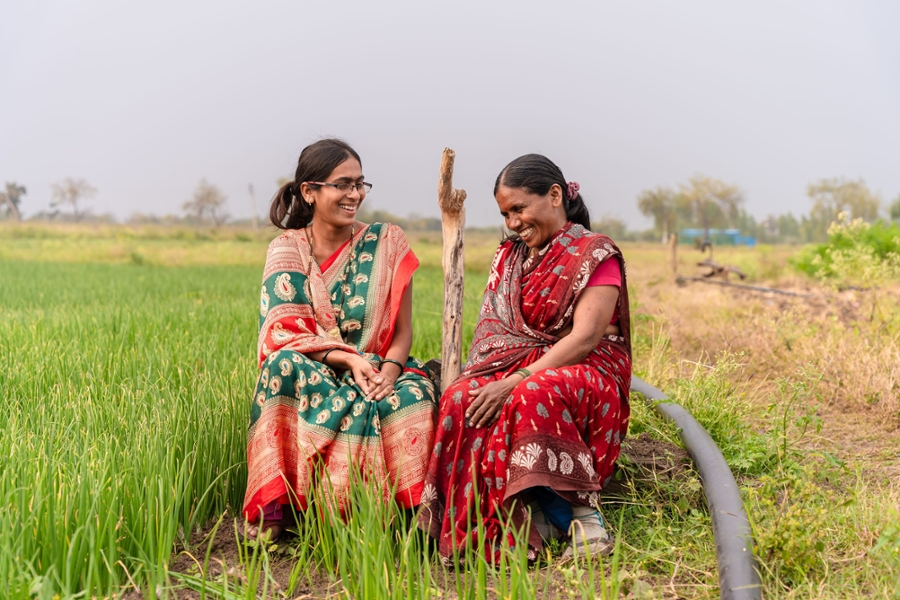
The Maharashtra State Legislative Assembly has taken a historic step towards gender equality by passing the Maharashtra Women Farmers Empowerment Bill, 2026, becoming the first Indian state to enact dedicated legislation recognising women as farmers in their own right.
Traditionally, millions of women have worked extensively in agriculture - undertaking sowing, transplanting, weeding, harvesting, livestock management and post-harvest processing, yet remained legally invisible because agricultural land is predominantly owned and recorded in the names of male family members.
Redefining the status of women in agriculture
This landmark legislation seeks to address this longstanding structural inequality by recognising women engaged in agricultural activities irrespective of land ownership. It enables eligible women to receive official recognition as women farmers through a Women Farmer Certificate, granting them access to government welfare schemes, agricultural extension services, institutional credit, crop-related benefits, insurance, training and other entitlements that have historically remained beyond their reach.
The Bill is particularly significant because it shifts the policy discourse from viewing women merely as "helpers" in agriculture to recognising them as independent economic actors and contributors to the rural economy. In doing so, it acknowledges the reality that women constitute a substantial proportion of India's agricultural workforce while continuing to face systemic barriers to land ownership, financial services, technology, markets and decision-making.
Furthermore, this pathbreaking legislation adopts an inclusive definition of a woman farmer. Instead of limiting eligibility to landowners, it recognises women who are actively engaged in cultivation, allied agricultural activities and family farming, thereby extending legal recognition to a much larger segment of rural women. This approach reflects the realities of Indian agriculture, where women frequently cultivate family land without having their names recorded in land titles.
Local government as the vital actor in the Bill implementation
Importantly, the Bill envisages an active role for Gram Panchayats and local institutions in identifying eligible women farmers, facilitating certification and supporting implementation. This recognises that effective delivery of rights depends not only on legislation but also on responsive and accountable local governance.
The objectives of the Maharashtra Women Farmers Empowerment Bill closely align with the Commonwealth Local Government Forum's Samata Gram programme, currently being implemented in selected Gram Panchayats across Maharashtra as part of the localisation of the CLGF’s Gender Equality Charter (GEC) for South Asia.
The Samata Gram initiative seeks to embed gender equality into local governance by strengthening the capacity of Gram Panchayats to plan, budget and deliver services in ways that respond to the different needs of women and men. The new legislation provides an enabling policy framework that can significantly strengthen these efforts.
A mutually reinforcing partnership
The Bill provides the legal recognition of women farmers, while Samata Gram can help ensure that these rights reach women at the grassroots through informed, accountable and gender-responsive local governance.
Under the Samata Gram framework, participating Gram Panchayats are empowered to:
- conduct awareness campaigns so that women understand their rights under the new law;
- identify eligible women farmers and facilitate the issuance of Women Farmer Certificates;
- integrate women farmers' priorities into Gram Panchayat Development Plans (GPDPs);
- promote gender-responsive budgeting for agriculture, water management, livelihoods and climate resilience;
- strengthen women's participation in Gram Sabhas, agriculture committees and local decision-making bodies;
- connect women farmers with agricultural extension services, financial institutions, producer organisations and government schemes.
Advancing the Gender Equality Charter for South Asia
The new legislation advances several commitments contained in CLGF's Gender Equality Charter for South Asia, particularly those relating to:
- women's economic empowerment and equal access to productive resources;
- gender-responsive planning, budgeting and public service delivery;
- equal participation of women in local governance and decision-making;
- recognition of unpaid and informal labour;
- inclusive, accountable and responsive local government institutions.
Moving forwards: from legislative framework to grassroots impact
By formally recognising women as farmers, Maharashtra has taken an important step towards correcting a historic gender imbalance within the agricultural sector. However, legislation alone cannot transform entrenched social norms or institutional practices.
This is where the Samata Gram programme can play a catalytic role. By localising the Gender Equality Charter through participatory planning, institutional strengthening and community engagement, Gram Panchayats can become the bridge between legislative intent and meaningful change in the lives of rural women.
The six Samata Gram pilot Gram Panchayats also present an opportunity to demonstrate how gender-responsive local governance can accelerate implementation of the new law. Lessons emerging from these pilots can help inform state-level implementation guidelines and provide a scalable model for integrating women's agricultural rights into local development planning.
Together, the Maharashtra Women Farmers Empowerment Bill and CLGF's Samata Gram initiative illustrate how progressive legislation and empowered local governments can work in partnership to advance women's rights, strengthen rural livelihoods and promote inclusive, gender-responsive development across Maharashtra.
📍View the Maharashtra Women Farmers Empowerment Bill, 2026 here: https://prsindia.org/files/bills_acts/bills_states/maharashtra/2026/Bill48of2026MH.pdf
📍View CLGF’s Local and Regional Governments Charter for Gender Equality in South Asia here: https://www.clgf.org.uk/default/assets/File/Gender%20Charter%20for%20South%20Asia_ComWLG_web.pdf
Photo credit: © EqualStock IN, 2024
Back to News