Resetting Ghana's Urban Future: Moving from national policy to local action
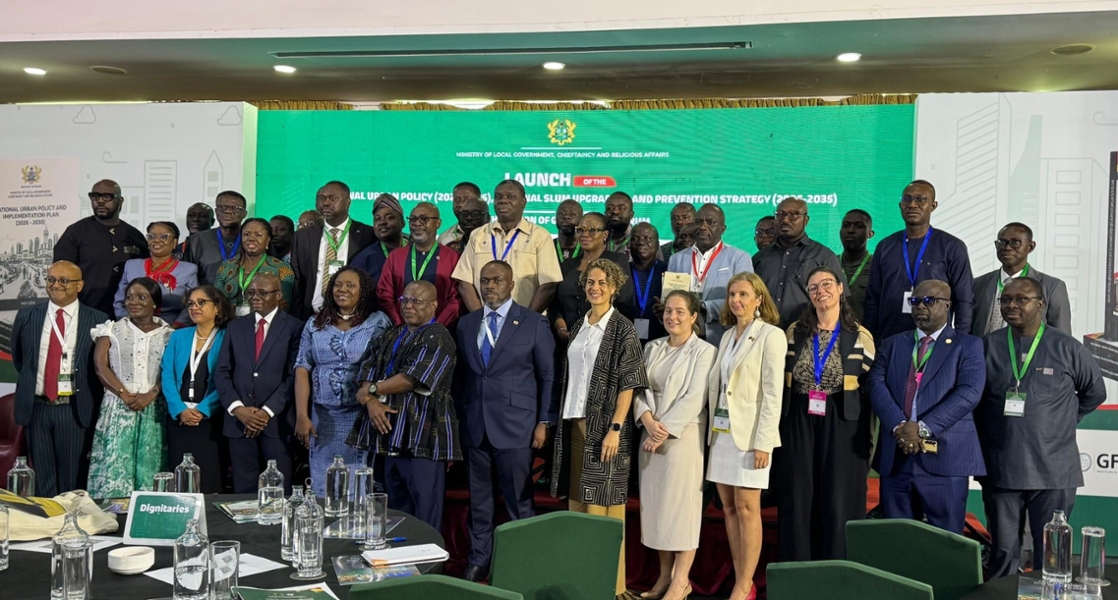
On July 28-29, under the theme 'Resetting Ghana’s Urban Future: Thinking Nationally and Taking Local Actions for Inclusive, Resilient and Sustainable Cities’, the ninth session of Ghana Urban Forum (GUF) was successfully convened in Accra, Ghana.
Organised by the Ministry of Local Government, Chieftaincy and Religious Affairs (MLGCRA), the two-day forum gathered over 250 representatives from government bodies, local authorities, development partners, civil society and the private sector to critically examine urban development challenges and opportunities under a multi-stakeholder lens. A central highlight of this year's forum was the official launch of the landmark National Urban Policy (NUP) 2026-2035 and its Implementation Plan, alongside the National Slum Upgrading and Prevention Strategy (NSUPS).
Delegates attending the GUF. Photo credit: © Joyce Ekuful, 2026
Responding to the realities of Ghana’s urbanisation
Ghana is experiencing rapid urbanisation, with over half of the country’s citizens currently living in urban areas - a figure projected to reach 65% by 2030. While this progress is positively shaping the nation’s development trajectory through economic growth, job creation and improved service delivery, it also presents complexities such as unplanned urban expansion, infrastructure deficits, housing shortages, environmental degradation and weak urban governance systems. Speaking at the recent High-level Political Forum in New York, Hon Odolley Sowah shared that the country is facing a housing deficit of more than 1.8 million units, with 37% of the urban population living in informal settlements.
In response, the newly approved NUP and NSUPS its Implementation Plan establish a 10-year roadmap designed to foster sustainable, resilient and inclusive urban development across Ghanaian municipalities. The 2026 GUF served as a platform to launch and translate these strategic directions into practice through different plenary presentations, high-level panel discussions and stakeholder engagement, covering key thematic areas:
- Urban planning and land use management: spatial planning, urban growth management, land governance systems
- Housing and urban development: affordable housing, slum upgrading, sustainable human settlements.
- Partnerships and financing: Mobilising resources for the NUP, waste management, energy, carbon finance and mitigating perennial flooding.
Empowering local leaders on the frontline
Participating in the high-level panel session on “Implementing the National Urban Policy: Priorities, Partnerships and Financing”, Claire Frost, CLGF Head of Programmes, stressed that local governments are at the heart of delivering solutions for citizens.
However, they often operate without adequate financial, legal or technical resources.
"Local governments are on the front line addressing the local impacts of global challenges, but they are doing so without the matching financial and legal powers, nor the technical capacity required for the 21st century," she noted. "Policies like the ones launched today are essential to enable local leaders to build safe, green, and equitable communities."
CLGF reiterated its commitment to supporting Ghanaian local governments in delivering on this mandate - including MLGCRA and the National Association of Local Authorities of Ghana (NALAG), through initiative platforms such as the Commonwealth Sustainable Cities Initiative (CSCI) and ongoing EU-funded programmes focused on multi-actor governance during times of polycrisis.
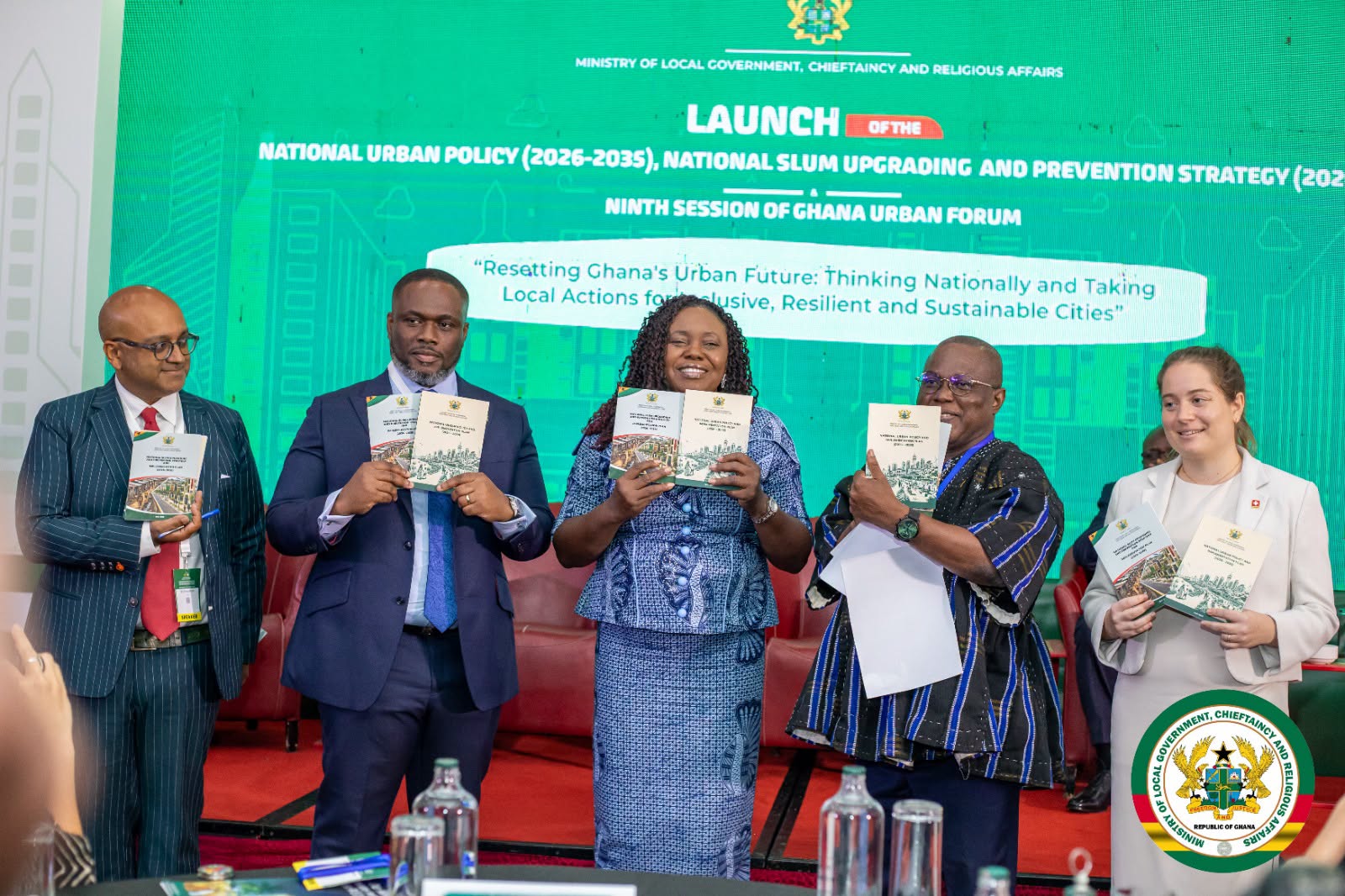
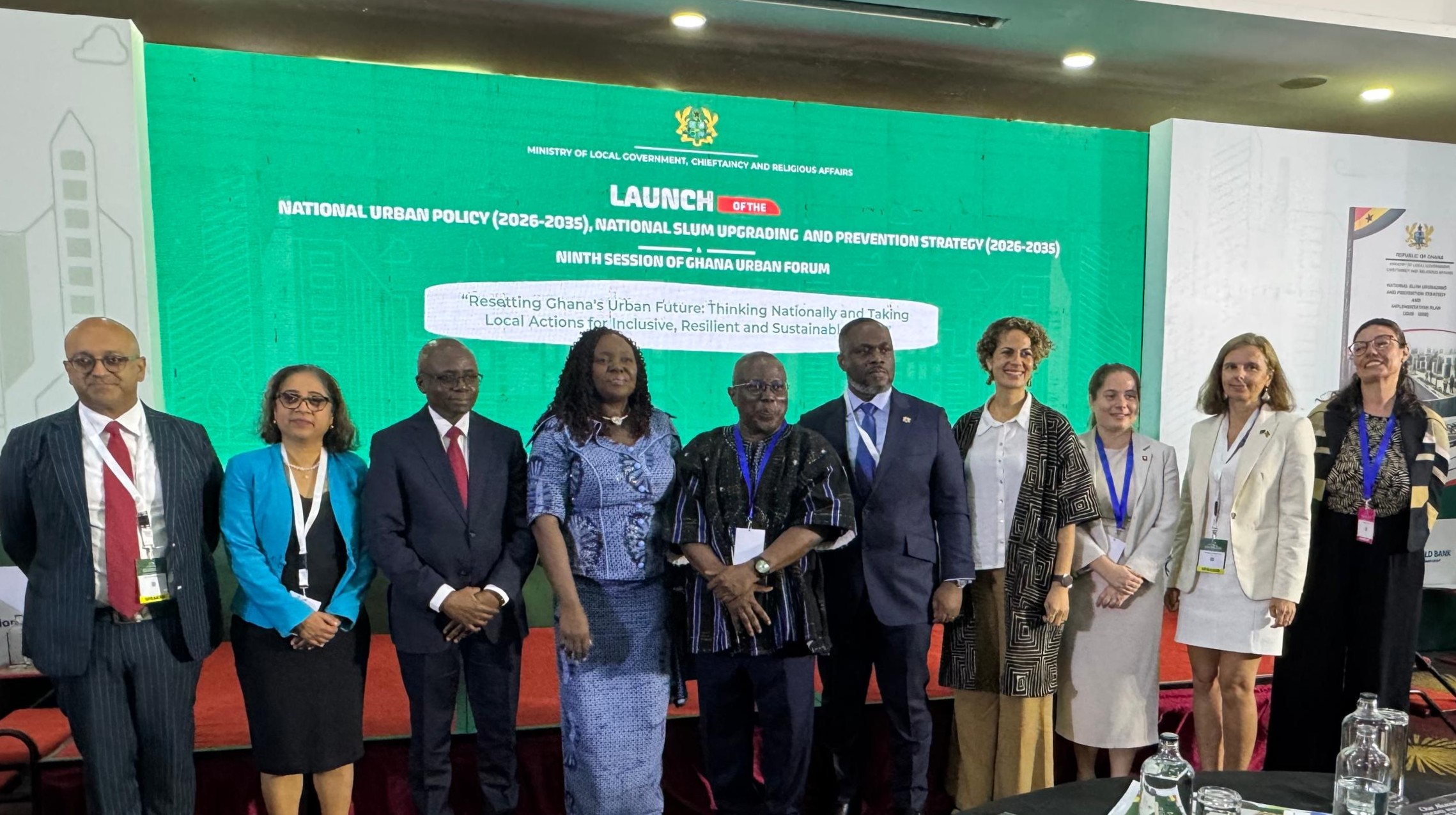
Delegates attending the GUF. Photo credit: © MLGCRA, 2026
Beyond Accra and towards global momentum
The Forum concluded with key recommendations:
- Make political leadership and attitudinal change the foundation of implementation
- Translate the national frameworks into integrated local plans and budgets
- Plan strategically across administrative boundaries
- Strengthen development control and enforce existing laws
- Establish clear responsibilities and enforceable accountability
- Build a credible and diversified financing system
- Use land and housing instruments more innovatively
- Make Ghana’s cities greener and more resilient
- Create one trusted urban data and learning system
As 2026 marks the 10th anniversary of the UN’s New Urban Agenda, the launch of Ghana's updated urban policy frameworks comes at a critical moment. With half of the world's urban population growth over the next three decades expected to occur within Commonwealth towns and cities, bridging the gap between national vision and local implementation in Ghana potentially offers a valuable lesson learnt for the wider region.
More particularly, the insights and local leadership models emerging from GUF 2026 will continue to inform discussions on sustainable urbanisation as CLGF carries these priorities forward to the Commonwealth Heads of Government Meeting in Antigua and Barbuda this November, and the upcoming Commonwealth Local Government Conference in March 2027.
Back to News