Building a climate-resilient Caribbean: Local leadership, strategic finance, and a unified path forward
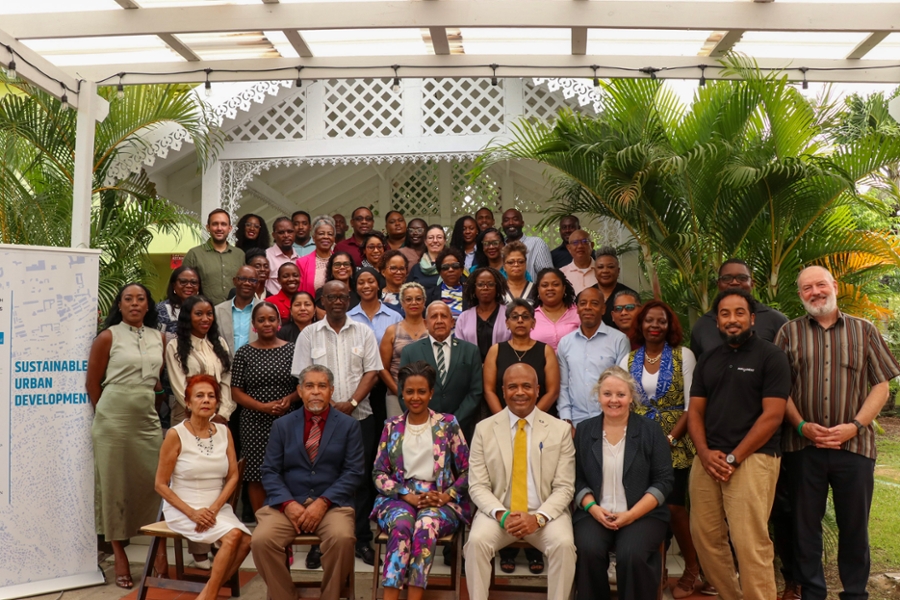
Across the Caribbean, coastal towns and cities are home to the majority of the population, placing them on the front lines where climate risks and complex urbanisation intersect. Recognising that true community resilience requires effective coordination across disciplines and all levels of government, CLGF, in partnership with the Caribbean Community Climate Change Centre (CCCCC), convened the Caribbean Regional Meeting 2026 in Saint Lucia from 9 to 11 September. The meeting served as a strategic platform to forge actionable partnerships, align regional adaptation strategies and unlock practical funding mechanisms for municipalities.
Mapping the baseline: National priorities and regional synergies
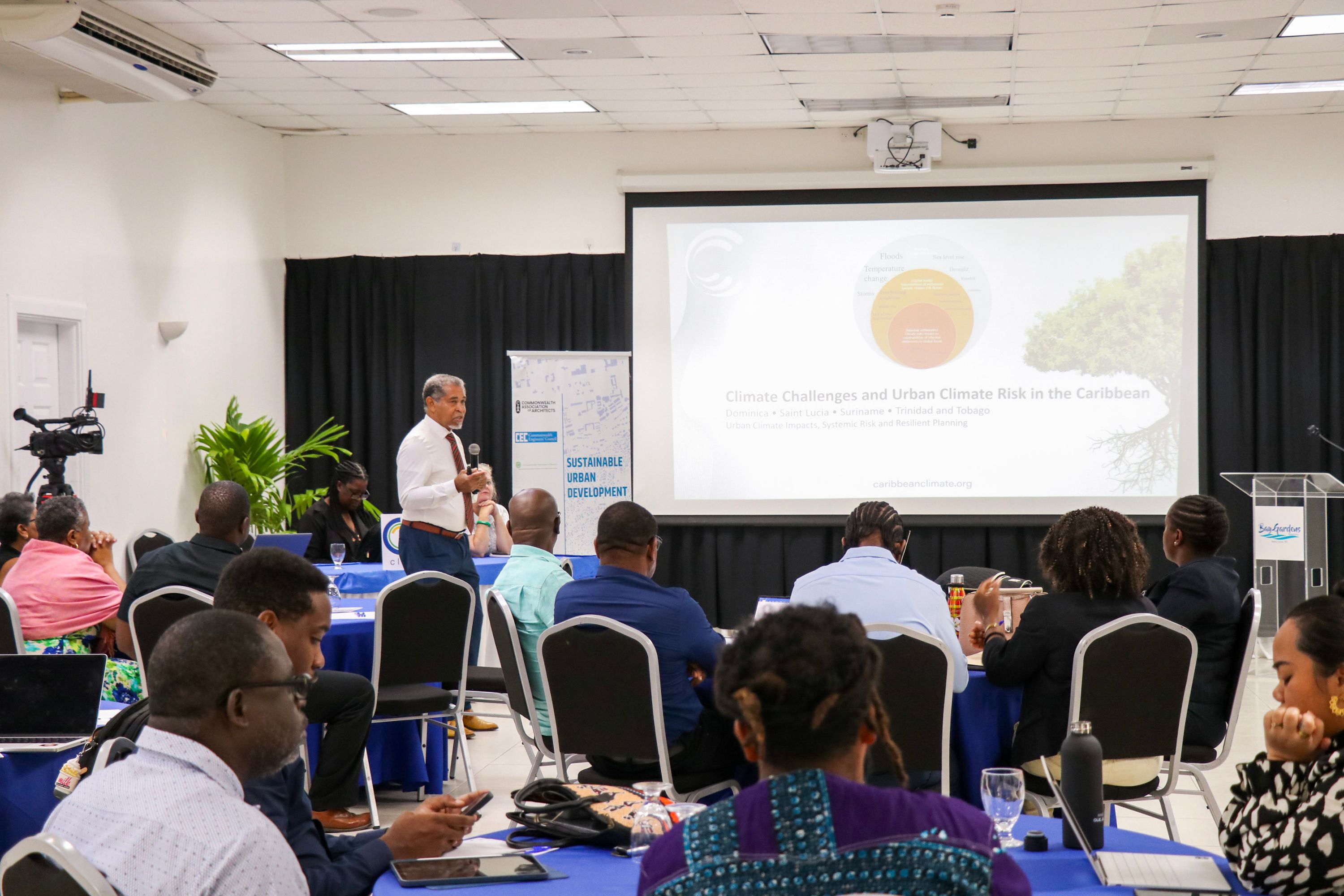
The three-day meeting commenced with a closed working session bringing together delegates from Dominica, Saint Lucia, Suriname and Trinidad and Tobago. As core partners of the GCF-funded ‘Multi-Country Climate Resilient Development Initiative’, representatives examined key urban climate challenges and pinpointed strategic focal areas for national intervention. Notably, discussions highlighted complementary regional strengths – for example, while Trinidad and Tobago presented robust models for climate-proofing municipal infrastructure through spatial planning, Suriname showcased exemplary nature-based solutions via effective mangrove management. These insights laid the groundwork for mapping out the specific resources needed to formulate structured pipeline proposals for the next phase of GCF urban adaptation funding.

Local government on the front lines
The second day broadened the conversation to the wider Caribbean delegation. Opening remarks from CLGF Chairperson Mayor Bernard Wagner (Belize City), Keith Nichols (CCCCC), and the Hon. Lisa C. Jawahir (Ministry of Agriculture, Fisheries, Food Security and Sustainable Development, Saint Lucia) voiced a unified message: As the climate crisis has no maritime borders, building a resilient future is a collective Caribbean imperative.
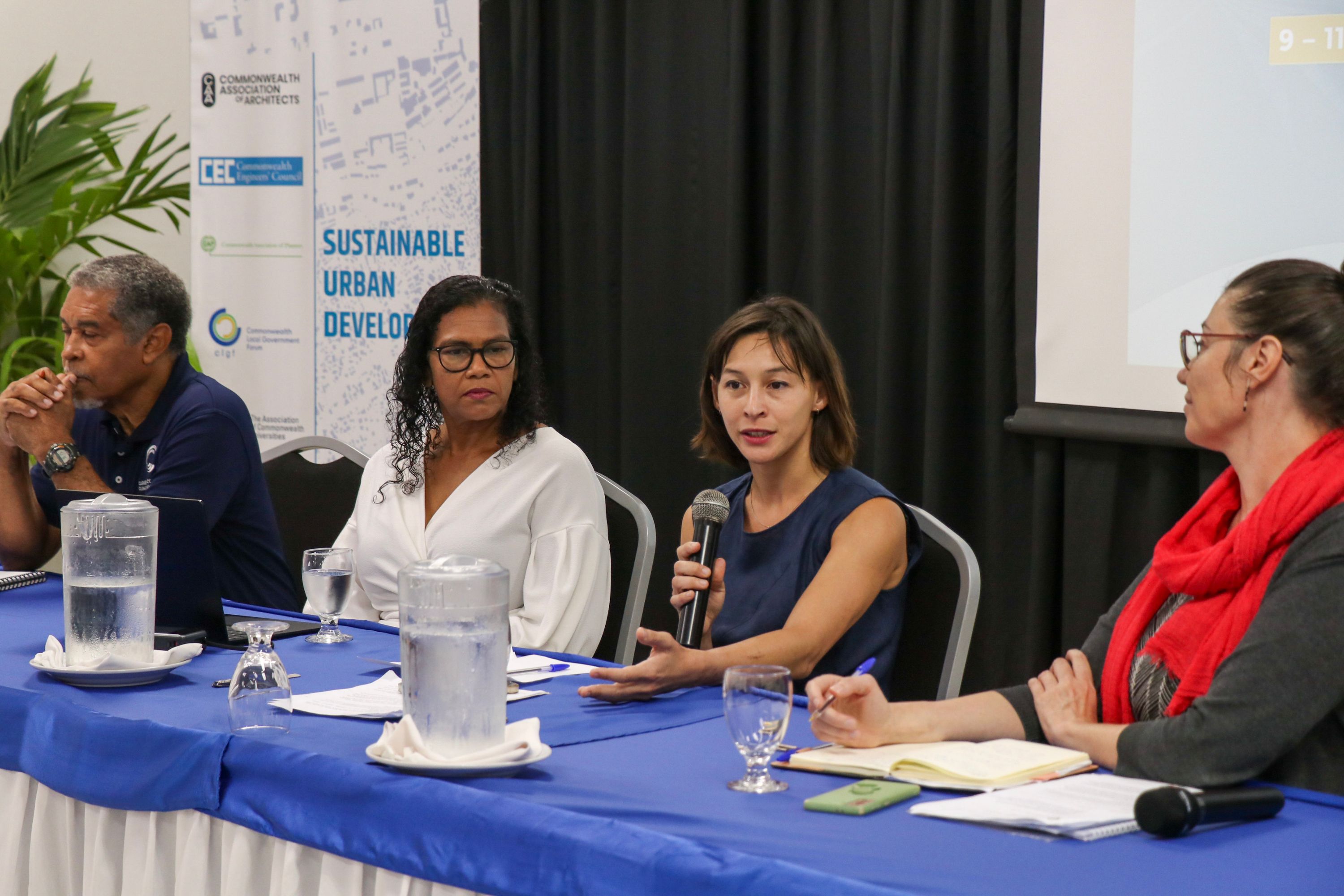
Subsequent panel and working group discussions underscored the indispensable role of local governments in this shared vision. Panel speakers and participants jointly concluded that to effectively translate high-level national planning into everyday service delivery, municipalities require enhanced technical skills, decentralised decision-making power, and better, sustainable access to climate finance. More importantly, the discussions highlighted that true resilience begins with human capital. Both nations and local authorities underscored the pressing need to establish safer working conditions, ensuring that frontline municipal staff are adequately protected from occupational health concerns, such as severe heat exposure during summer months and the direct physical impacts of natural disasters.
Urban finance, asset management and external fundings
The final day shifted focus to the practical engines driving climate adaptation. Participants navigated the complex macroeconomic landscape of the Caribbean, noting that managing historical debt obligations naturally limits the fiscal space available for public investment at the subnational level.
Complementing this macroeconomic view, Claire Frost, CLGF Head of Programmes at CLGF, presented a comprehensive urban finance framework outlining five interconnected recommendations. She emphasised that expanding local fiscal space with an explicit equity lens must be matched by capable local systems, stronger intermediary pathways, and full-lifecycle infrastructure financing, ensuring that climate resources effectively reach local priorities.
Regarding urban asset management, a pivotal analysis revealed that up to 70% of an infrastructure asset’s lifetime cost occurs during its use and disposal phases. Hence, David Jackson, Non-Resident Fellow, Local Government Finance, NYU Center on International Cooperation (CIC), underscored that proactive infrastructure asset management must be reframed as a high-yield investment rather than a recurrent subsidy. He also called for local governments to prioritise the upkeep of existing assets to build both physical resilience and fiscal space.
The session also provided critical insights into external funding mechanisms. The Inter-American Development Bank (IDB) highlighted its Subnational Finance Program, which offers direct financing to local governments in specific jurisdictions. Meanwhile, the European Union (EU) detailed its Global Gateway strategy, which has already mobilised €30 billion in the Latin America and Caribbean region for projects ranging from sustainable transport to renewable energy. Adding to this landscape, the Caribbean Development Bank (CDB) also called for better local-central coordination in the development of proposals for funded work, making sure that municipal priorities are effectively represented in national applications.
However, unlocking these funds requires a shift in approach. Speaking on the panel, David Jackson encouraged local authorities to adopt a programmatic focus aimed at systemic change. By aligning municipal initiatives directly with national climate commitments - such as Nationally Determined Contributions (NDCs) and National Adaptation Plans (NAPs), local governments can strategically support central governments meet international targets. This approach grants national leaders valuable political capital on the global stage, creating a mutually beneficial pathway to secure sovereign-backed development financing for local implementation.
The way forward
The meeting concluded with a clear roadmap for empowering local authorities, advancing climate-responsive urban planning, and enhancing both financial and operational processes.
The approaching Commonwealth Heads of Government Meeting (CHOGM) 2026 will provide Caribbean nations with an enabling platform to call for greater access to concessional climate finance, forge stronger partnerships for resilient infrastructure and secure direct technical assistance for local authorities. By combining empowered local leadership with targeted access to international finance, Caribbean municipalities are moving towards building a resilient Caribbean where citizens and future generations can live safely and comfortably.
Back to News