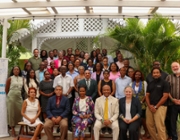
CLGF at the Pre-COP 31 in Fiji
The Pre-COP 31, 5-8 October, is being hosted by the Government of Fiji and it will include a Leaders Meeting which will take place in Tuvalu. The Pre-COP is the final major diplomatic moment before COP31 and wi ...

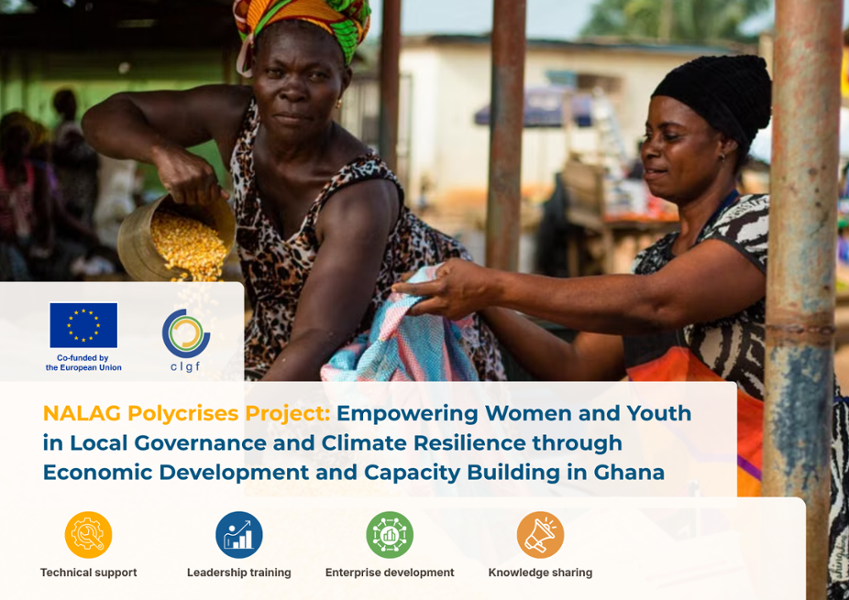
CLGF, in partnership with the National Association of Local Authorities of Ghana (NALAG), has been implementing the NALAG Polycrises Project: Empowering Women and Youth in Local Governance and Climate Resilience through Economic Development and Capacity Building in Ghana. Commissioned by the European Union with a budget of EUR 80,000, this 12-month initiative targets local authorities in the Central and Eastern Regions, aiming to strengthen responsive, inclusive and economically resilient local governance systems capable of navigating the polycrisis era.
Local government in Ghana is currently navigating a complex polycrisis of challenges where climate change, economic instability and social inequalities intersect.
The informal sector in Ghana, which provides livelihoods for the majority of the population, is heavily dominated by women and young people. It contributes to over 80% of national employment but remains marginalised and under-supported. Many home-based and micro-enterprises lack access to essential resources such as skills training, market opportunities and financial services. Also, development planning at the Metropolitan, Municipal, and District Assembly (MMDA) level is often siloed, treating gender equality and social inclusion (GESI), economic empower-ment and climate adaptation as separate priorities.
This fragmentation limits the ability of local governments to effectively respond to the complex, overlapping needs of communities - particularly of women and youth, whose growth potential remains constrained. For instance, following the 2023 elections, only 4.1% of elected assembly members were women - despite the national law requiring at least 30% of their representation in leadership positions. Similarly, youth voices are often overlooked in local governance processes, with limited opportunities to engage meaningfully in co-creation of policies and projects. A study undertaken by Afrobarometer in 2023, concluded that many young people between the ages of 18 and 35 in Ghana have not exploited their potential in political and civic activities to ensure that their voices are heard.
These institutional and systemic challenges are further intensified within a broader polycrises context, where climate change, economic instability, governance deficits and social inequalities intersect. The combined effect is a diminished capacity of MMDAs to deliver equitable public services, foster resilient local economies, and support communities to adapt to multiple shocks.
The NALAG Polycrises Project aims to address these critical institutional and systemic challenges by strengthening MMDAs capacity, enhancing inclusive participation, and promoting climate-resilient economic opportunities. It will contribute to building responsive, inclusive and economically resilient local governance systems equipped to navigate the complexities of the polycrisis era while delivering sustainable development outcomes for all.
The project is expected to deliver tangible results through four strategic pillars:
For more information, view the project’s factsheet here.
Back to News