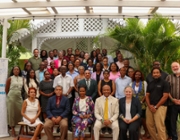
CLGF at the Pre-COP 31 in Fiji

The Pre-COP 31, 5-8 October, is being hosted by the Government of Fiji and it will include a Leaders Meeting which will take place in Tuvalu. The Pre-COP is the final major diplomatic moment before COP31 and wi ...

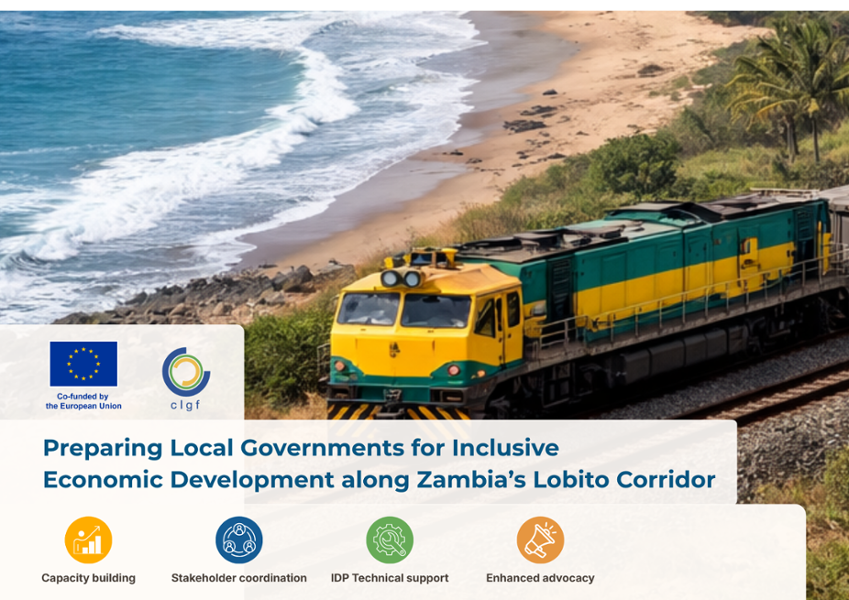
The Lobito corridor is a major transport and economic route linking the Port of Lobito in Angola with the Democratic Republic of Congo (DRC) and Zambia. It is supported by the European Union through the Global Gateway, alongside other international partners and donors. The Corridor is expected to improve transport and trade links and bring new investment into areas such as mining, agriculture, logistics, and related sectors.
In Zambia, the Corridor will have an impact on several councils in the Copperbelt and North-Western Provinces, including Chingola, Kitwe, Ndola, Kalumbila, Solwezi and Kapiri Mposhi alongside nearby districts that are expected to benefit from the increased trade and economic activity.
For local communities, while this investment could mean new jobs, businesses and opportunities, it will also bring changes as growing towns and increased business activities means creation of more demand for land, housing, roads, water, sanitation, waste collection and other council services. Local councils will therefore have an important role to play in managing growth, planning infrastructure, supporting local businesses, protecting the environment, and ensuring that local communities benefit.
However, discussions between CLGF and the Local Government Association of Zambia (LGAZ) have highlighted that local authorities have so far had very limited involvement in the Lobito Corridor planning and consultation processes. The period following Zambia’s 2026 elections provides an important opportunity to address this. New councils will be considering their Integrated Development Plans (IDPs) and setting priorities for the coming years, creating a timely entry point to ensure that the opportunities and risks linked to the Lobito Corridor are integrated in local planning.
The project aims to strengthen local governments along Zambia’s Lobito Corridor to manage growth and maximise long-term local economic and social benefits. It has four specific objectives:
Capacity building: Equip newly elected councils in Copperbelt and North-Western provinces to plan for corridor impacts.
Multistakeholder coordination: Enhance policy engagement and dialogue among local authorities, national government, the EU, and key partners.
Technical support for IDP: Assist Integrated Development Plan (IDP) reviews, focusing on inclusive urban growth, local economic development, climate resilience, and gender equality.
Enhanced advocacy: Empower LGAZ and corridor councils to influence national, EU, and corridor-level consultations and decision-making.
This project will encourage councils to make sure that the opportunities created by the corridor are opened to women, young people and persons with disabilities, while also considering local economic development, climate resilience, environmental protection and community development.
A targeted pilot aligned with local government elections and incoming council planning cycles. Rather than establishing parallel structures, CLGF and LGAZ will leverage existing local and national government mechanisms and build upon ongoing initiatives across the Corridor.
Pillar 1: Council Readiness and Corridor Briefings
CLGF and LGAZ will review existing corridor plans, partner activities and development projections to understand what future investment could mean for individual councils. This will be used to prepare practical briefing materials for local authorities. New elected councils will be briefed on issues they may need to address earlier in their term, including land use, infrastructure, service delivery, LED and future IDP decisions.
Pillar 2: Mayors and Town Clerks Dialogue
A Lobito Corridor Mayors and Town Clerks Roundtable will be organised alongside the LGAZ Annual General Meeting. It will bring together mayors, town clerks and council secretaries to discuss common priorities and secure political and administrative commitments. The meeting will help establish a stronger collective government voice on the corridor and identify issues that need to be taken forward with the national government and development partners.
Pillar 3: Targeted Support for IDP Reviews
Technical assistance will be provided to selected priority councils during the review of their IDPs. Support will focus on integrating corridor priorities into local planning, particularly LED, land use, infrastructure and service needs, climate resilience and social inclusion. Technical missions, council workshops and reviews of draft IDPs will be used to provide technical hands-on support.
Pillar 4: Advocacy, Coordination and Local Government Voice
CLGF and LGAZ will map relevant national, EU and development partner consultation processes and support local government participation where possible. The project will develop a clear local government position on the Corridor and promote greater recognition of councils as partners in its implementation. Rather than setting up separate processes, the project will make use of existing meetings and consultation platforms wherever possible.
By the end of the pilot, corridor councils should be better informed, better connected to corridor decision-making and better prepared to include the opportunities and risks of the Lobito Corridor within their development planning.
For more information, view the project’s factsheet here.
Back to News