CLGF at the Pre-COP 31 in Fiji

The Pre-COP 31, 5-8 October, is being hosted by the Government of Fiji and it will include a Leaders Meeting which will take place in Tuvalu. The Pre-COP is the final major diplomatic moment before COP31 and wi ...

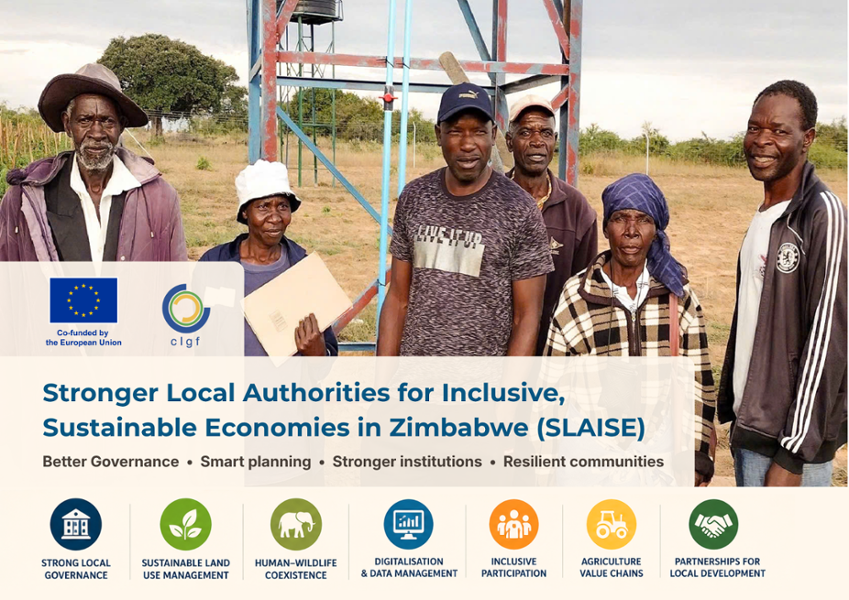
Commissioned by the European Union, CLGF Zimbabwe - in partnership with key implementing partners, is delighted to announce the official launch of a 40-month initiative: Stronger Local Authorities for Inclusive and Sustainable Economies (SLAISE). With a total estimated budget of EUR 2.5 million, this project targets 25 urban and rural local authorities across Zimbabwe, aiming to strengthen transparent, accountable and sustainable local governance that actively drives inclusive local economic development and long-term community resilience.
As the tier of governance closest to communities, Zimbabwe’s local authorities are important actors in ensuring effective service delivery, democratic engagement and economic oversight. However, their ability to lead territorial development is often hindered by centralised control, overlapping mandates and tight fiscal constraints. In addition, whilst substantial external and private investments flow into agricultural value chains, these initiatives frequently operate independently of municipal planning and infrastructure frameworks.
SLAISE aims to address these structural challenges by strengthening the policy, fiscal, digital and participatory systems through which local authorities’ function. This will position and equip local authorities to act as the territorial coordinators of inclusive, climate-resilient economies. By doing so, the project also ensures that major investments in agricultural value chains and green growth are sustainably anchored within local municipal systems.
The project employs a politically informed, systems-strengthening and implementation-oriented approach. It does not assume full local autonomy in the context of partial devolution. Instead, it strengthens the functions that local authorities can realistically exercise, while building evidence, legitimacy and coordination mechanisms that improve their role within the wider intergovernmental system.
Moving beyond governance compliance towards economic empowerment, it links service delivery, digitalisation, ward participation, fiscal capacity and local economic development in its strategic approaches to achieve tangible results:
SLAISE’s sustainability strategy is anchored in institutional embedding. LADS will support ward profiling, revenue systems, value-chain data, budgeting, monitoring and harmonised reporting, while LOGRDC will curate local authority profiles, spatial data, service indicators, value-chain information, research outputs and public learning products. By working through MLGPW, UCAZ, ARDCZ, ZILGA, councils and technical partners, the project will strengthen existing systems rather than create parallel structures. Local authority co-financing, in-kind contributions, digital capacity building, peer learning and integration of outputs into statutory plans and budgets will help sustain results after EU funding ends.
For more information, view the project’s factsheet here.
Back to News