New project on advancing inclusive
CLGF's new project aims to strengthen local governments along Zambia’s Lobito Corridor to manage growth and maximise long-term local economic and social benefits.

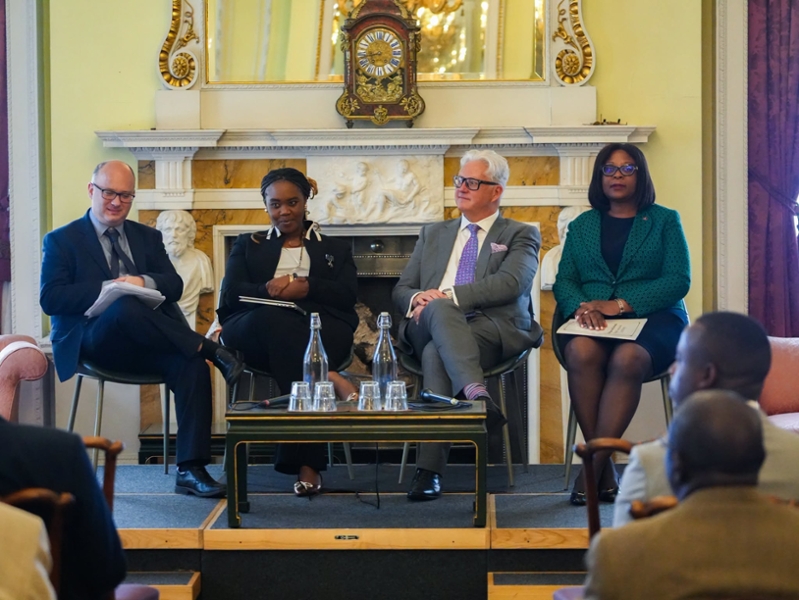
Democratic resilience is the bedrock of institutional stability, social cohesion and sustainable development across the Commonwealth. For nations to withstand modern pressures and evolving systemic threats, this foundation must be constantly protected, renewed and strengthened.
This was the central message of last Thursday’s Marlborough House Dialogue on “Pathways to democratic resilience: A Commonwealth conversation” - convened by the Commonwealth Secretariat in partnership with CLGF, the Commonwealth Parliamentary Association (CPA), and the Westminster Foundation for Democracy (WFD).
Bringing together High Commissioners, parliamentarians, local leaders, Commonwealth organisations and academia, the dialogue underscored a pressing global necessity: reinforcing democratic processes against contemporary challenges to sustain citizen trust and institutional integrity, especially in this digital age. Participants called for stronger pan-Commonwealth cooperations through collective actions and open dialogues, while recognising the role of good local governance in enhancing overall institutional resilience.
The panel featured Stefan Kossoff, Head of Democratic Governance Department (Foreign, Commonwealth and Development Office), H.E. Karen-Mae Hill, High Commissioner for Antigua and Barbuda, Professor Nnenna Ifeanyi-Ajufo, Professor of Law and Technology (Leeds Beckett University), and CLGF Board Member Councillor Kevin Bentley (Colchester City Council and Senior Vice Chairman at the UK Local Government Association). Representing CLGF, Councillor Bentley delivered the session on local governance and citizen trust, highlighting how inclusive local governance is the frontline for securing grassroots democracy and fostering civic participation.
Across the Commonwealth, democracy remains the daily norm of 2.7 billion people, allowing them to have a meaningful voice in decisions affecting their lives and ensuring institutional power is exercised in citizens’ interest. This alignment enables the development of practical solutions to complex national and global challenges. Delivering the opening remarks, John Virgoe, Senior Director of the Governance & Peace Directorate, emphasised that democracy and good governance endure as foundational institutional pillars of the Commonwealth family - a core priority of the Secretariat's new 2025–2030 Strategic Plan.
However, these systems are currently facing critical headwinds that risk fueling anti-democratic sentiments. Governments and institutions are increasingly losing public trust in their capacity and accountability to manage modern pressures such as rapid urbanisation, climate change and technological development. This trust deficit is starkly evident in regions like the Caribbean, where a recent UNDP report states that 57% of people prefer democracy in principle, yet only 32% express satisfaction with how it is practiced.
Democratic resilience is further challenged by the rapid development of technology and artificial intelligence (AI). Professor Nnenna Ifeanyi-Ajufo pinpointed that it is more important than ever to counter expanding risks such as societal polarisation online, cyberattacks and systemic mis- and disinformation. Coupled with growing threats to media freedom - a cornerstone of good governance and public empowerment, protecting the democratic fabric has become a matter of immediate urgency.
.jpeg)
As the primary interface between citizens and the state, local government directly shapes the public's daily experience of democracy. Thus, strong local institutions can help protect democracy during challenging times.
At the dialogue, Councillor Kevin Bentley stressed that institutional trust is reinforced through effective service delivery by local councils and authorities. As democratic practices come in many forms and must be adapted to distinct social, cultural, and local contexts, local governments - with their direct understanding and experience, are able to translate high-level national ambitions into everyday outcomes that can be clearly seen and felt on the ground.
Beyond practical service provision, grassroots governance serves as a powerful mechanism for facilitating community involvement in decision-making and empowering future elected leaders. Building on this perspective of inclusive governance, Kanungwe Chota, a former Mayor and Vice Chairperson of the Local Government Association of Zambia, emphasised the importance of enabling youth participation in local councils and leadership roles to drive innovation, new solutions and fresh ideas. This reflects a reality where the more inclusive institutions become, the stronger democratic resilience becomes.
Ultimately, local democracy forms the foundation of national stability - a principle firmly embodied in CLGF’s Aberdeen Agenda and integrated into the Commonwealth Charter.
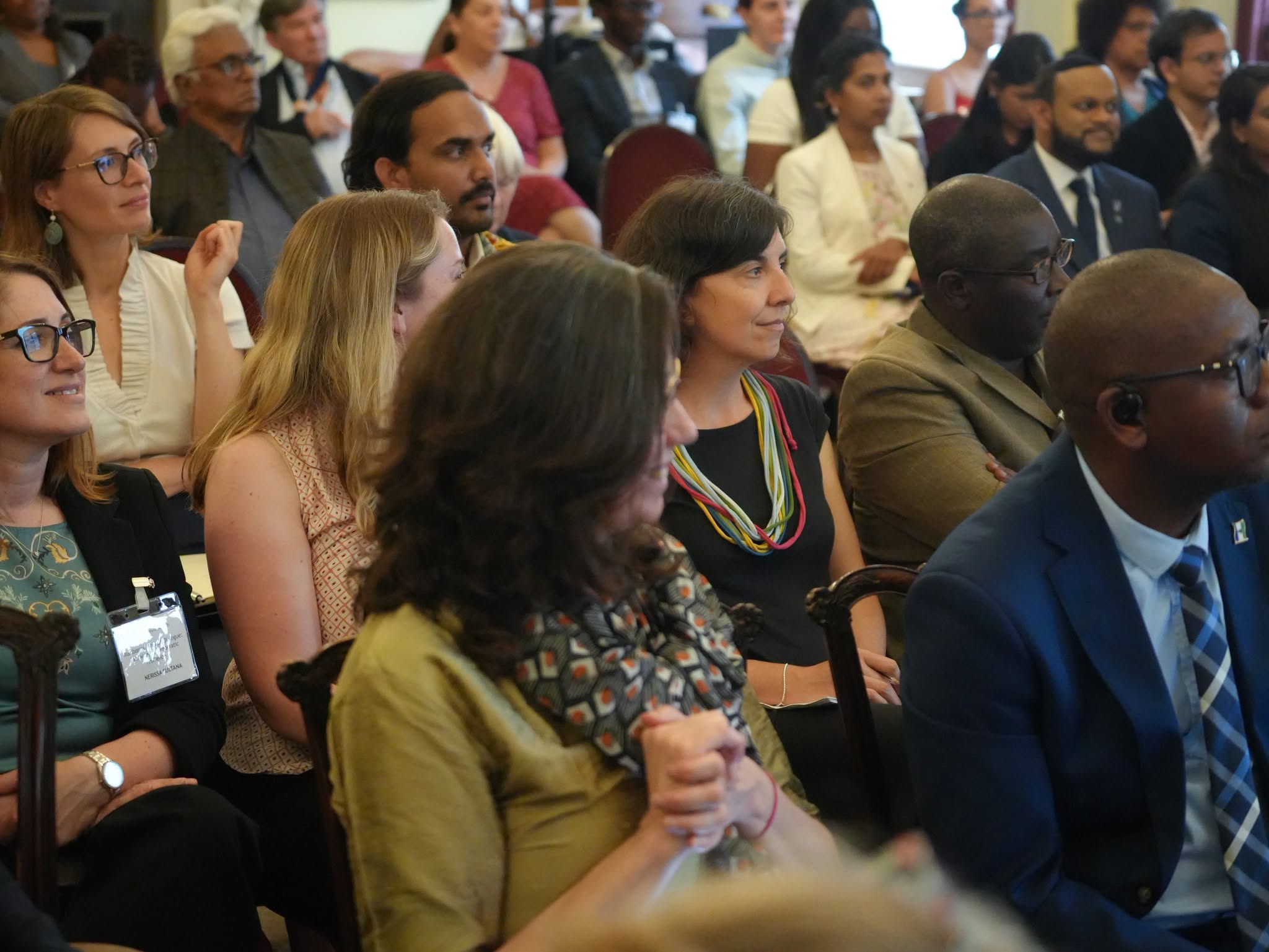
Expanding to a bloc-wide perspective, H.E. Karen-Mae Hill, High Commissioner for Antigua and Barbuda, welcomed the recognition of democracy and good governance as one of the three key pillars within the new Commonwealth Secretariat’s 2025-2030 Strategic Plan. Alongside the panellists and participants, she reflected on the significance of robust multilateral cooperation, joint action and open dialogue in strengthening both individual and collective capacity across all levels and nations.
Key areas for synergic solutions include:
Safeguarding electoral integrity: Continuing core institutional practices, such as Commonwealth’s election observation missions, to secure unified approaches to transparent and fair elections, thereby rebuilding the public’s trust in governance.
Navigating the digital era: Technology and AI standards must be adapted to each nation’s distinct infrastructure, resources and digital capacities to harness digital opportunities while preventing risks like societal polarisation and cyber crisis from destabilising local institutions.
Driving peer-to-peer learning: Utilising international networks like CLGF to support local capacity building, exchange good practices while also influencing high-level policy to ensure that democratic governance is relevant and streamlined across levels.
The upcoming Commonwealth Heads of Government Meeting (CHOGM) 2026 in Antigua and Barbuda represents a timely opportunity for 56 member states to agree on concrete actions built upon these priorities. As the Commonwealth is uniquely defined by its shared values on democracy and good governance, member states must leverage every forum and dialogue to actively build, shape and renew the global democracy agenda.
Back to News