The Urban Finance Gap: Taking the UFAG's work to the wider CLGF membership
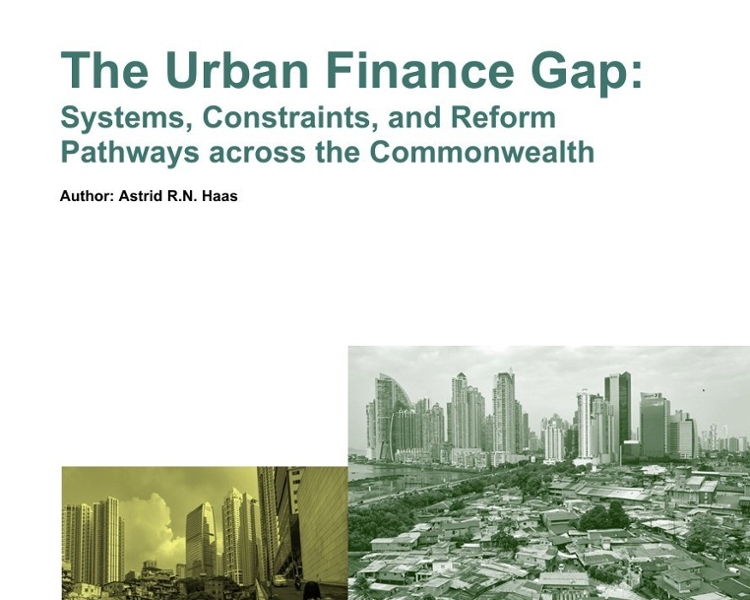
The Commonwealth Local Government Forum (CLGF) is now taking forward the outputs of the Urban Finance Action Group (UFAG) to the wider CLGF membership, following several months of research, discussion and refinement.
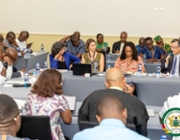
Convened under the Commonwealth Sustainable Cities Coalition (CSCC), the UFAG brought together a mix of local government leaders, local government associations, technical experts and partner organisations to examine the urban finance gap and identify practical pathways for strengthening local government finance across the Commonwealth. The group included representatives from Cameroon, Zambia, Jamaica, Sri Lanka, Uganda, South Africa, India, Australia and the UK, alongside research and policy expertise and CLGF colleagues supporting the process.
This matters because local governments are being asked to do more than ever. They are expected to help drive infrastructure delivery, service improvement, local economic development and climate resilience, often in contexts where the systems that shape how they access and use finance are not aligned with those responsibilities.
A collaborative process focused on practical solutions
The UFAG process was designed to do more than diagnose the problem. Its purpose was to bring together different perspectives - from local government practice, local government associations, policy expertise and research - to ask a more practical question: what needs to change if local governments across the Commonwealth are to finance delivery more effectively?
That discussion made clear that the urban finance gap is not simply a question of local government capacity. It is also about the wider system: how fiscal powers are structured, how transfers work, how borrowing is regulated, whether intermediary institutions exist, how climate finance reaches local level, and whether the overall system works fairly across different places.
The main paper prepared through this process, together with the group’s subsequent discussion, has now been translated into a set of revised recommendations and supporting materials intended for wider use.
What is now being shared more widely
CLGF is taking the deliverables from the UFAG process to the wider membership through a communications and engagement campaign running from June 2026 to March 2027.
This next phase will include:
- the main UFAG paper on the urban finance gap
- a revised recommendations brief
- a recommendations-by-audience note
- a set of urban finance case studies
- practical materials that members can use
- and wider policy and communications outputs linked to CLGF events and Commonwealth-facing opportunities
The main paper and supporting materials for members will be available on the CLGF website here.
A shorter and clearer set of recommendations
Building on the paper and the UFAG’s discussions, the recommendations have been refined into a shorter and more usable set, framed around five core areas:
- local fiscal space and delivery, with equity at the centre
- stronger local finance systems
- intermediary pathways to finance
- workable local access to climate and adaptation finance
- infrastructure finance across the full life of the asset
The aim has been to make the recommendations easier to communicate and easier to use - whether in dialogue with national governments, within local government associations, through partner engagement, or in wider Commonwealth-facing discussions.
Why this matters for CLGF members
These outputs are being shared with the wider CLGF membership because the issues they address cut across the local government sector. They speak directly to the conditions local governments need if they are to deliver effectively, fairly and sustainably.
For some members, the recommendations may be most useful as an advocacy tool in dialogue with finance ministries, local government ministries or development partners. For others, the value may lie in the practical lessons from the case studies, or in the way the paper helps frame the urban finance challenge as a systems issue rather than a narrow capacity issue.
Either way, the intention is that the UFAG outputs should be usable.
Looking ahead
As part of the rollout, a webinar is planned for 30 July 2026, at which the final paper is expected to be introduced by Astrid Haas, subject to final confirmation. This will provide an opportunity to present the paper, highlight the revised recommendations and point members to the wider set of supporting materials.
The next stage of this work is about ensuring that the ideas and proposals developed through the UFAG process travel beyond the group itself - through CLGF members, through partner organisations, and through the wider policy spaces where local government finance can be influenced.
CLGF looks forward to continuing that conversation with members and partners in the months ahead.
Back to News