CLGF at the Pre-COP 31 in Fiji

The Pre-COP 31, 5-8 October, is being hosted by the Government of Fiji and it will include a Leaders Meeting which will take place in Tuvalu. The Pre-COP is the final major diplomatic moment before COP31 and wi ...

In India, gender continues to shape experiences of water governance at the Gram Panchayat level (village-level local government councils). In many rural communities, women play a central role in managing water for household needs, sanitation and agriculture, while their participation in decisions relating to water infrastructure, source selection and maintenance can remain limited.
This highlights a critical gap between women’s everyday knowledge of water challenges and their participation in formal decision-making processes. Bridging this gap requires not just creating seats at the table but also reforming the institutional and social norms that determine whose voices are truly heard.
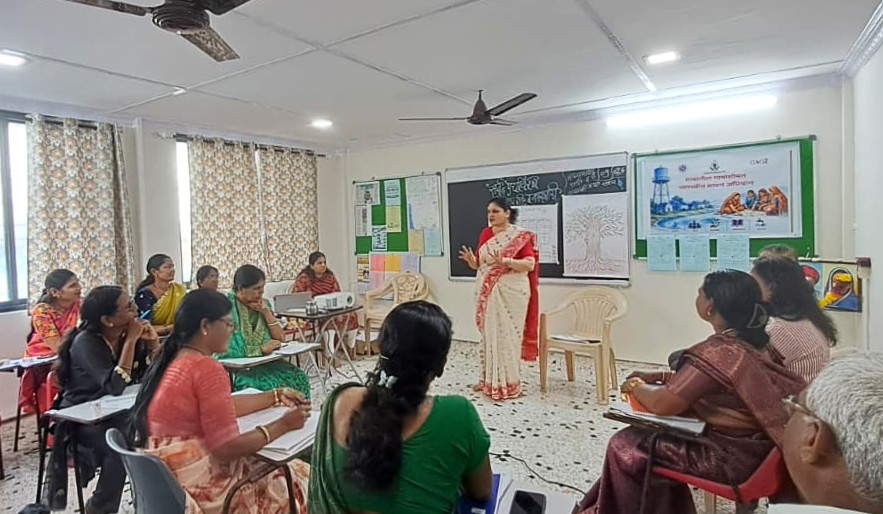
Such topic was explored during an expert session on “Understanding Gender in Water Resource Management”, facilitated by Anuya Kuwar, CLGF Regional Programme Manager for Asia, for master trainers in Maharashtra, India. Organised jointly by RSCD and ASAR India from 1-3 September 2026, the session considered how more responsive water planning can be supported through two complementary approaches: systemic change and an intersectional understanding of women’s diverse experiences.
.jpeg)
“Suppose women are invited to participate in decisions about water in the village, but the meeting is scheduled at 2 p.m., when women are occupied with cooking, childcare, collecting water and looking after livestock. Will confidence training alone solve this?”
Traditional capacity-building programmes often focus on individual empowerment. However, strengthening individual agency is not enough if institutional and cultural constraints remain unaddressed.
For example, scheduling village assemblies (Gram Sabhas) at times that conflict with domestic responsibilities directly limits women’s ability to attend and contribute. Substantive progress therefore requires a dual approach: supporting women's leadership while reforming the institutional and social environments in which they operate. Local councils need to review their operational practices - including meeting schedules, agenda-setting and speaking procedures, to ensure processes actively facilitate, rather than inadvertently hinder, women's meaningful participation.
.jpeg)
Equally critical is moving away from the assumption that rural women represent a homogeneous group. Gender is only one factor shaping lived experience; it continuously intersects with socio-economic class, caste, tribal background, age, and disability.
In local water governance, the challenges faced by an educated, land-owning woman differ substantially from those encountered by a woman from an impoverished or Adivasi background seeking access to shared community sources. Thus, standardised, uniform policy interventions cannot adequately address these diverse realities. As local governance systems adapt, institutional reforms must consider not only procedural adjustments, but also which community perspectives and lived experiences directly inform those decisions.
Women are not merely primary users or beneficiaries of rural water services; they are the key knowledge holders and active stakeholders in local resource management. Across India’s Gram Panchayats, embedding systemic equity and intersectional perspectives into grassroots planning is essential to building responsive, climate-resilient water systems that address local realities.
With global efforts focused on accelerating SDG 6 – particularly ahead of the 2026 UN Water Conference in Abu Dhabi this December, these grassroots perspectives underscore a vital message for national and international agendas: genuine water security cannot be achieved without addressing social and institutional gender barriers at the community level.
Back to News