Tackling sargassum in the Caribbean: The role for local government
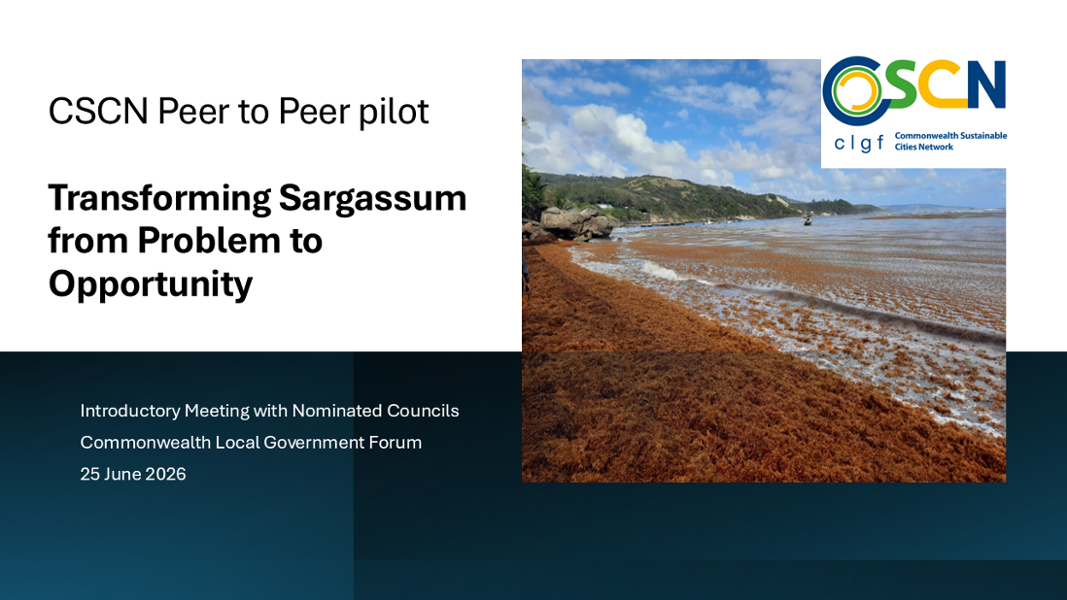
An online meeting on 25th June provided an opportunity to kick off a new project in the Caribbean focusing on addressing the sargassum challenge at the local level. Sargassum is a seaweed which is increasingly but unpredictably coming ashore across the Caribbean, affecting access to local beaches, tourism and livelihoods. It becomes increasingly toxic and smells once it washes onto local beaches.
Tacking sargassum is the focus of a major regional EU Global Gateway project for Latin America and the Caribbean, and will be looking at tracking, collecting and developing alternative productive uses for sargassum. CLGF’s event, organised through the Commonwealth Sustainable Cities Network (CSCN) is exploring ways in which local governments can address the sargassum challenge.
Claire Frost, Head of Programmes gave a welcome presentation, and the meeting was a chance for the participating countries to share their experience of managing sargassum. Dominica, St Lucia, Grenada, Antigua and Barbuda, and St Kitts and Nevis were all represented and had an opportunity to share their experience of local action and also initiatives that are being supported nationally, where there should and could be closer cooperation with local government. They highlighted the impact on fishing beds and livelihoods, on sea grass and coral reefs, on access to beaches and the resulting impact on tourism, as well as the health impacts, many of which are worse when the seaweed is on land.
Loiza Razduel, Sargassum Value Chain Manager for the SARSEA Project at the Organisation of Eastern Caribbean States (OECS), explained the overall goal of their project, funded by the AFD and launched in late 2025. It is a collaborative initiative aimed at minimizing the devastating environmental, economic, and health impacts of massive seaweed strandings across the Caribbean and has four focal areas:
- Regional Cooperation
- National Action Plans for managing and cleaning up sargassum
- Research and Science to better understand the impacts of sargassum
- Valorisation and Innovation, supporting private sector innovations and civil society groups in transforming stranded sargassum into sustainable, economically beneficial products (such as biochar, fertilizers or biofuels).
.jpg)
The meeting highlighted the value of peer learning at the local level, sharing practical experience, identifying realistic improvements and supporting local authorities to develop their own action plans and link into national and regional programmes that are underway, including the work being supported by OECS.
Peer learning will be at the heart of the work and following a further round of national consultations, the partners will come together again to define a set of concrete actions around four key priority areas namely: increasing public awareness, coordinating with other authorities on safe removal, supporting the local economy, and proactively preparing for unpredictable blooms.
Watch the meeting recording here, and view the meeting presentation slides here.
Back to News