Safe environment for women's leadership: Implementing the POSH Act in Maharashtra, India
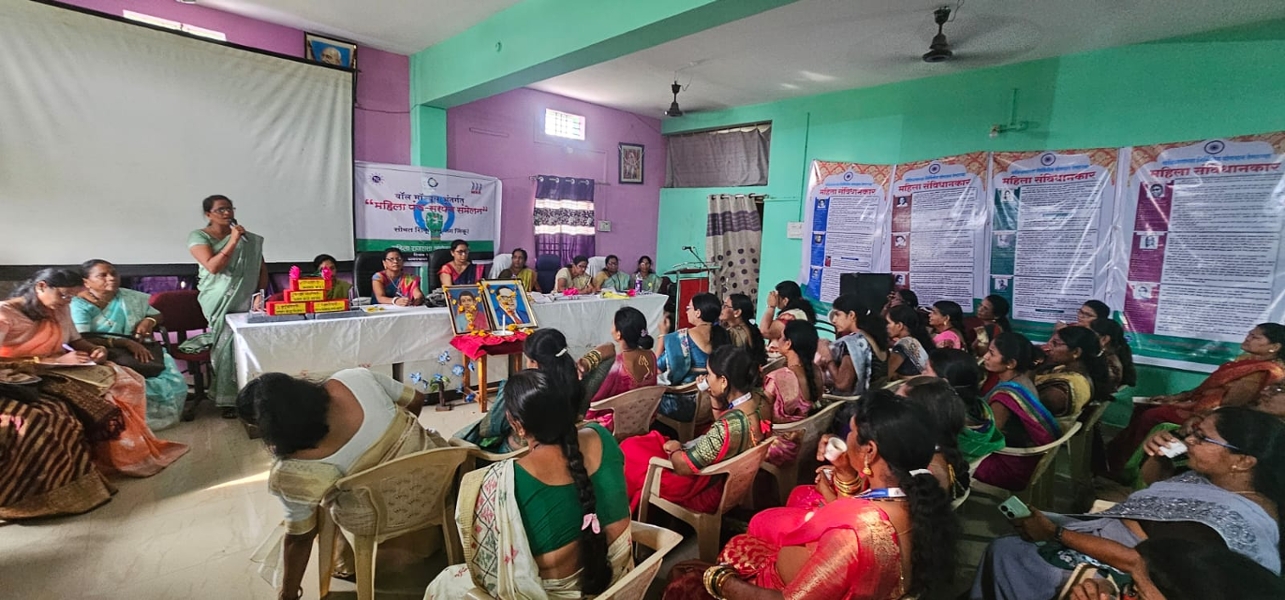
CLGF recently facilitated a session on the POSH Act (Prevention of Sexual Harassment of Women at the Workplace) to elected women representatives (EWRs) and local NGO network partners in Maharashtra State, India. With a focus on rural local government frameworks, the session aligned the Act as a major step towards localising CLGF's Gender Equality Charter and wider objectives of the EU-CLGF Strategic Grant Agreement (SGA) phase IV.
.jpeg)
Previous training for female local authorities in Gram Panchayats. Photo credit: © Anuya Kuwar / CLGF, 2026
The importance of the POSH Act in Gram Panchayats
During her presentation, Anuya Kuwar, CLGF Regional Programme Manager for Asia, emphasised that while India's 73rd Constitutional Amendment has successfully expanded women's formal representation in local governance across Panchayati Raj Institutions1 – including Gram Panchayats2, true empowerment requires more than just securing elected seats.
In practice, elected women often face persistent barriers, including interruptions, disrespectful comments, intimidation and exclusion from decision-making processes. For them to lead confidently, the institutional environments they are part of must be safe, dignified and completely free from fear. Ultimately, establishing such a secure environment is what enables women to participate actively, lead effectively and contribute meaningfully to local development.
The POSH Act, therefore, becomes vital to the nation’s effort in protecting women from sexual harassment and promoting gender-responsive governance Serving as India’s definitive legislative framework against gender-based discrimination at work, the Act is deeply rooted in constitutional values of equality, safety and dignity, ensuring that every woman has access to a secure and equitable working environment.
The session also addressed a common misconception: that political or public spheres are exempt from corporate-style compliance to the Act. However, legal frameworks firmly establish that a Gram Panchayat office, its official meetings and associated field locations constitute a "workplace". Therefore, women representatives, employees, contractual workers, ASHA workers, Anganwadi workers4, volunteers and citizens interacting with Gram Panchayat institutions are fully entitled to protection under the Act – reflecting constitutional guarantees of equality, dignity and women's participation in public life.
.jpeg)
Previous training for female local authorities in Gram Panchayats. Photo credit: © Anuya Kuwar / CLGF, 2026
Actionable steps for inclusive, safe governance
To foster an institutional culture of zero-tolerance towards harassment at Gram Panchayats, a set of actionable recommendations were outlined for their immediate actions:
Mainstreaming gender equality in local governance requires making institutions safe for those who are part of them. When an elected woman representative can serve her community without fear, local administration grows fundamentally stronger. Protecting dignity at the grassroots is not simply a legal obligation; it is an important mechanism for deepening democratic institutions and ensuring sustainable, inclusive development.
View the full presentation note (in English) here.
View the presentation in Marathi here.
---
1Panchayati Raj Institutions (PRIs) (India's rural local government system) – A three-tier system of democratically elected local governments responsible for planning and delivering public services and local development in rural areas.
2Gram Panchayats (village-level local government councils) – The lowest tier of the Panchayati Raj system, consisting of elected representatives who govern one or more villages and are responsible for local administration, public services, and community development.
3ASHA workers (Accredited Social Health Activists) – Community-based female health workers appointed by the Government of India who serve as the link between rural communities and the public health system, promoting maternal and child health, immunisation, and access to healthcare.
4Anganwadi workers (community-based early childhood care and nutrition workers) – Frontline workers under the Government of India's Integrated Child Development Services (ICDS) programme who provide early childhood education, nutrition support, health monitoring, and services for pregnant women, breastfeeding mothers, and young children.
Back to News